


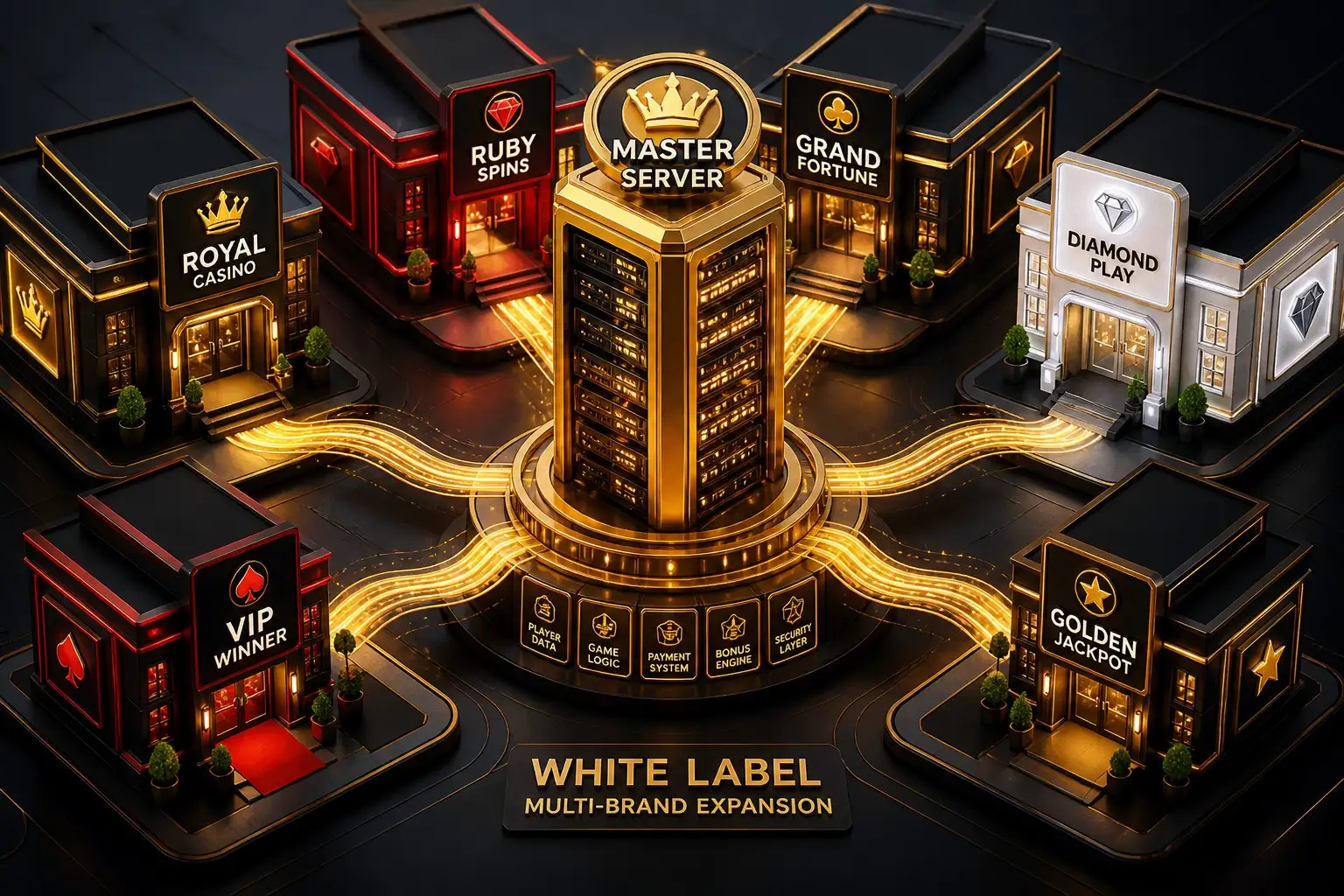
There is a moment in every operator’s growth when one brand reaches its ceiling. The brand is established, the players are loyal, but the market segment it serves is saturated. The traditional answer—build a second platform—costs months and millions. The 2026 answer is white-label expansion: launching additional brands on the same proven backend. With the panda master white label platform, operators run multiple independent brands with full ownership, distinct identities, and complete operational control, all from a single infrastructure. This guide explains how multi-brand expansion works and why it is the smartest growth move available.
Why Multi-Brand Beats Single-Brand Growth
A single brand has structural limits. It appeals to one demographic, occupies one market position, and cannot easily serve conflicting segments. A premium brand cannot also be the budget option; a local brand cannot also be the international one. Multi-brand strategy solves this: each brand targets a distinct segment with its own identity, and the portfolio captures a wider market. The economics work because the technology is shared—only the brand layer is new.
How the Panda Master White Label Platform Works
1. Brand-Isolated Configuration
Each brand on the platform is a fully isolated tenant: its own player database, credit inventory, game configuration, promotional engine, and reporting. Players, balances, and data never mix between brands, preserving compliance boundaries and operational clarity. The isolation is architectural, not administrative—there is no way for one brand’s configuration to affect another.
2. Distinct Brand Experience
White label does not mean cookie-cutter. Each brand can carry its own name, logo, visual theme, game selection, and bonus structure. A distributor can run a high-energy brand for a younger demographic and a premium brand for high-rollers, with completely different player experiences, on the same backend. The player sees your brand; the technology stays invisible.
3. Unified or Separate Management
The platform supports both centralized and delegated management. A single operator can run all brands from one master account, or a holding company can grant each brand manager scoped access to their own tenant. This flexibility matches the organizational structure of your expansion, whether you manage everything or build a team of brand managers.
The Multi-Brand Growth Playbook
- Identify the segment gap: Choose a new brand position that your existing brand cannot serve—a different demographic, region, or price tier.
- Configure the new tenant: Set up the brand’s identity, game catalog, and promotional rules using the white label template.
- Seed and validate: Launch with a controlled player group, validate the experience and economics, then scale.
- Cross-promote strategically: Use the portfolio to cross-promote between brands where appropriate, without violating brand separation.
- Consolidate reporting: Review portfolio-level performance on the master dashboard while keeping per-brand reporting clean.
The Economics of White-Label Expansion
The financial case is compelling. Building a second platform from scratch typically costs more than the first, because the team is already stretched and the requirements are stricter. White-label expansion reduces this to a fraction: the infrastructure already exists, the games are already integrated, and the compliance stack is already certified. The marginal cost of a new brand is configuration and marketing, not development. For operators with an established player base and market knowledge, white label is the fastest path to portfolio diversification.
What You Own When You White Label
- Your player data: Full ownership of player relationships and data, with clean export capability.
- Your brand identity: Complete control of the player-facing experience.
- Your economics: Transparent pricing with no hidden revenue share on player activity.
- Your compliance: Each brand configured for its own jurisdiction and reporting obligations.
Case Pattern: The Operator Who Launched Three Brands in One Year
Multi-brand expansion in action is best understood through a case pattern from 2025-2026. A single-brand operator had built a solid business in one regional market: a recognizable brand, a loyal base, and steady revenue. The ceiling was visible—the brand’s identity was tied to one demographic, and the operator could not serve adjacent segments without confusing the core audience. The decision was made to launch a second brand targeting a younger, higher-energy player profile, followed by a third targeting a more casual, bingo-oriented base.
Because the operator ran on the white-label platform, each launch was a configuration exercise rather than a construction project. The second brand launched with its own identity, game selection, and promotion calendar within days. The third followed the same template. All three brands shared the same proven backend, but players experienced three completely distinct products. The operator managed all three from the master dashboard, with clean per-brand reporting and isolated player data.
The portfolio effect was immediate: the three brands together reached market segments the single brand could not, and cross-promotion between brands created a wider funnel. When one brand had a slow month, the others carried the portfolio. The operator’s total GGR across the portfolio grew substantially beyond the single-brand ceiling, with incremental operating cost far below what three separate platforms would have required.
The pattern’s lesson generalizes: multi-brand strategy is the growth model of operators who have proven their operation once and want to compound it. The white-label architecture removes the technology barrier, turning brand expansion from a capital project into a strategic decision.
Frequently Asked Questions
Do my brands share players or credit inventory?
No. Each brand is an isolated tenant with its own players, balances, and inventory. You can, if you choose, transfer players between brands as a business decision, but nothing mixes automatically. This isolation protects both compliance and operational clarity.
How long does it take to launch a new white-label brand?
With a configured template, a new brand can go live in days rather than months. Brand identity setup, game selection, and promotional configuration are the main steps, all completed through the dashboard. Integration effort is near zero because the infrastructure is shared.
Can I run brands in different jurisdictions on one backend?
Yes. Each brand tenant carries its own jurisdiction configuration: geo-fencing, compliance settings, responsible gaming rules, and reporting. A single backend can serve brands across multiple states or countries, with each brand compliant in its own market.
Can brands share marketing resources?
Strategically, yes. The portfolio can share certain resources—payment infrastructure, analytics, compliance tooling—while keeping brand identities separate. Cross-promotion between brands is a deliberate choice: you can surface one brand to another’s players where it makes sense, without merging their data or experiences.
How do I avoid brand cannibalization?
Position each brand for a distinct segment and keep the identities clearly differentiated. If two brands target the same players, they compete with each other; if they serve different segments, they expand your reach. The analytics help you monitor overlap and adjust positioning before cannibalization becomes a problem.
What happens if I outgrow the white-label model?
White label is a deployment choice, not a ceiling. The underlying infrastructure is the same regardless of model, so scaling from white label to a more customized arrangement is configuration, not migration. Your brands, data, and integrations carry over without disruption.
Getting Started With Your Second Brand
The path to multi-brand operation starts with a single deliberate step: choose the segment your existing brand cannot serve, and launch the second brand as a controlled experiment. Configure its identity, seed it with a focused player group, and validate the economics before scaling. The white-label template makes this low-risk and reversible. Once the second brand proves the model, the third and beyond follow the same pattern, and the portfolio grows with compounding confidence rather than compounding risk.
What is the best way to sequence brand launches?
Launch the second brand when your first is stable and profitable, not while it is still being built. The first brand provides the template, the cash flow, and the operational learning. Once the second validates the multi-brand model, subsequent launches follow faster because the process is proven. Sequence follows confidence, not ambition.
Why Multi-Brand Operators Compound Faster
There is a compounding logic to multi-brand operation that single-brand operators miss. Every brand launch exercises the same playbook, shortening the learning curve and reducing the risk of the next launch. Every brand’s data informs the portfolio’s decisions, so each new market entry benefits from accumulated knowledge rather than starting from zero. And every successful brand strengthens the operator’s reputation with partners and players, opening doors that single-brand operators cannot reach. The portfolio does not just add brands; it multiplies capability.
Conclusion: The Portfolio Is the Moats
Single-brand operators compete in one market with one identity. Multi-brand operators build a portfolio that captures multiple segments, spreads risk, and compounds learning across brands. With the panda master white label platform, launching your second, third, or tenth brand is a configuration decision, not a construction project. The growth ceiling that limits single-brand operators simply does not exist here. Build your portfolio, own every brand, and let one backend power an empire.
Ready to launch your next brand? Contact the Panda Master team to configure your white-label expansion today.

Comments are closed