


There was a time when a distributor ran fish tables, and that was the business. In 2026, the operators with the highest player lifetime value run diversified portfolios, and the engine of that diversification is cross-sell. When a player who loves fish tables discovers slots, and a slot player discovers bingo, their engagement multiplies. The panda master online game catalog is built for exactly this: a cross-category portfolio designed to move players between game types and increase their overall value. This guide explains how multi-category catalogs drive GGR and why cross-sell is the growth lever most distributors underuse.
Why Diversified Catalogs Outperform Single-Game Networks
A single-game network has a hard ceiling: the players who love that game, and nothing else. A diversified catalog raises the ceiling in three ways:
- Broader appeal: Different players prefer different formats; a diverse catalog attracts a wider base.
- Longer player journeys: A player who exhausts one game has another waiting, extending their lifetime.
- Resilience: If one title underperforms, the portfolio carries the network.
The result is not just more games; it is more value per player, which is the definition of higher GGR.
What the Panda Master Catalog Includes
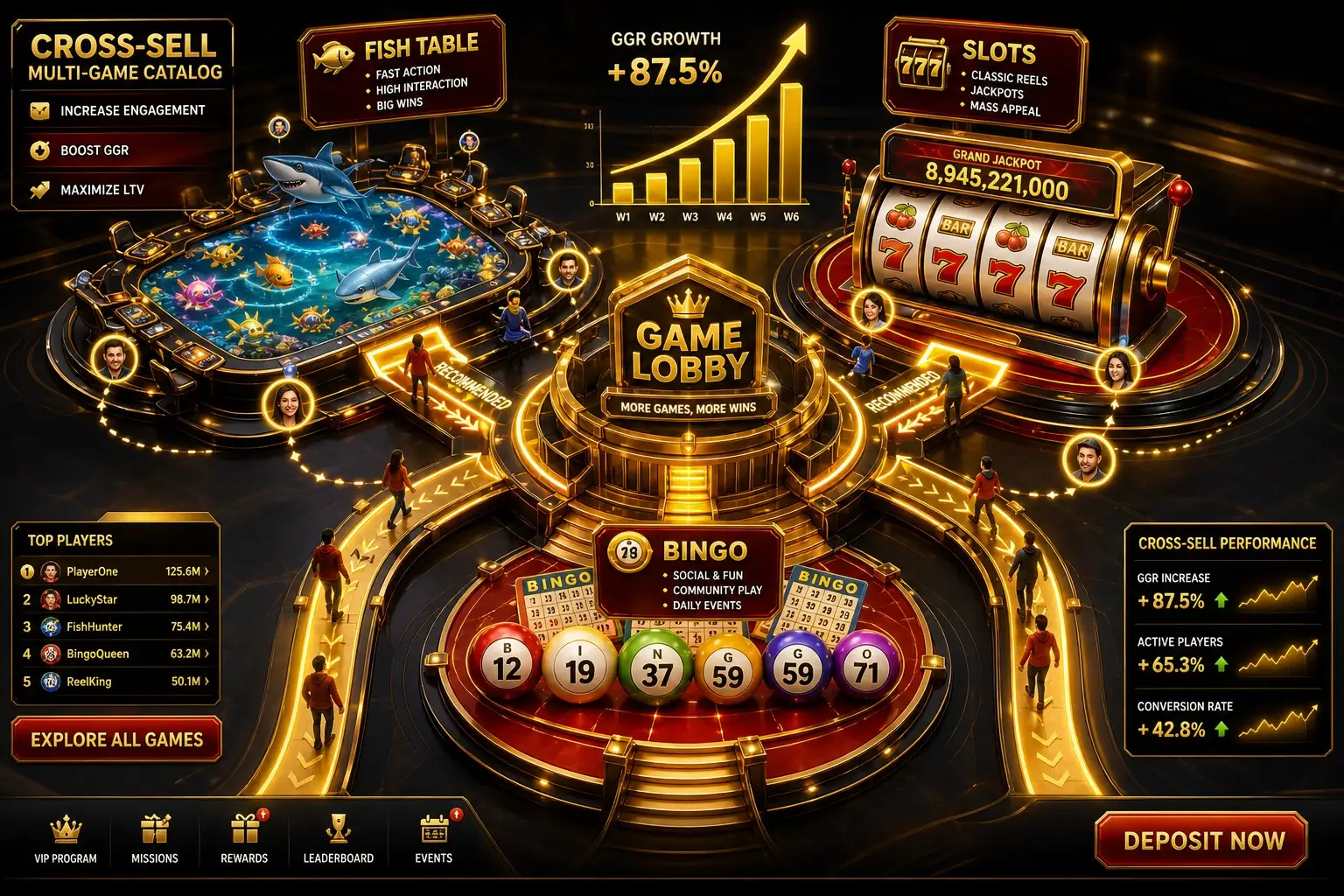
When distributors ask what games are included with panda master, the answer is a multi-category portfolio engineered for cross-sell:
1. Fish Table Games
The engagement anchor. Skill-based, social, and high-retention, fish tables bring players in and keep them returning. They remain the entry point for most new players.
2. Slot Games
The volume engine. Slots offer the broad appeal and fast-paced variety that keep players in the platform during off-peak fish sessions. A rich slot catalog captures players who prefer reel-based play.
3. Bingo and Casual Formats
The retention layer. Casual, community-driven formats appeal to a different player profile and provide low-pressure entry points for new players. They fill the engagement gaps between intense fish sessions.
How the Cross-Sell Engine Works
1. Natural Flow Between Categories
The catalog is designed so that players flow between categories naturally. A player finishing a fish session sees slot promotions; a slot player is invited to a bingo community event. The cross-sell engine surfaces relevant content based on player behavior, not random exposure.
2. Shared Credits and Wallet
Cross-category play is frictionless because players use the same credits and wallet across all games. There is no barrier to moving between fish tables and slots; the value of their balance carries over instantly. This unified economy is what makes cross-sell work.
3. Promotion Architecture
The platform’s promotion engine supports cross-category campaigns: play fish today, earn a slot bonus tomorrow. These structured offers guide players into new categories and measure the lift in multi-category engagement.
The Data on Multi-Category Players
Cross-network analytics consistently show that multi-category players are the most valuable segment:
- Higher deposits: Players active in two or more categories deposit meaningfully more than single-category players.
- Longer sessions: Cross-category players have extended session durations as they move between games.
- Better retention: The variety of formats reduces the fatigue that causes single-game churn.
For distributors, this means the catalog is not just content; it is a retention and monetization strategy.
Implementing Cross-Sell in Your Network
- Enable the full catalog: Ensure all three categories are active so players can explore.
- Run introductory campaigns: Guide fish players into slots with a first-session bonus in the new category.
- Measure multi-category rates: Track the share of players active in more than one category; this is your cross-sell health metric.
- Refine the flow: Use engagement data to adjust which cross-category offers surface to which players.
Case Pattern: The Distributor Who Doubled Multi-Category Play
The revenue impact of cross-sell is best demonstrated by a case pattern from 2025-2026. A distributor had run fish tables exclusively for two years. The operation was healthy but plateaued: the same players, the same volume, the same ceiling. The distributor’s player base was engaged but single-dimensional, and the network was exposed to the performance of one game family.
The shift came with the decision to activate the full catalog. Slots were added, then bingo, and the distributor ran a structured cross-sell campaign: fish players received a first-session slot bonus, and slot players were invited to a bingo community event. The shared wallet made cross-category play frictionless—players moved between formats with no barrier. The promotion engine guided the flow, surfacing each category to the players most likely to enjoy it.
Within one quarter, the share of players active in multiple categories rose substantially, and the economics followed. Multi-category players deposited more and stayed longer than the single-category base, lifting overall GGR beyond the previous plateau. The portfolio also insulated the network: when one category had a quiet week, the others carried the volume. The distributor’s exposure to any single game title shrank while total revenue grew.
The general lesson: cross-sell is not about replacing a successful format; it is about building a portfolio where each category amplifies the others. The unified economy and promotion architecture make that amplification automatic once the full catalog is active.
Frequently Asked Questions
Will adding slots and bingo cannibalize my fish table revenue?
No. The evidence points the other way: cross-category players spend more overall, and fish tables remain the anchor format for most networks. The new categories capture additional play rather than shifting existing play, growing total GGR.
Do I need to market each category separately?
You can start by promoting the catalog as a whole, then layer category-specific campaigns once you understand your players’ preferences. The cross-sell engine handles the in-network flow; your marketing drives initial awareness.
How do I know which category to emphasize for my base?
Your engagement data answers this. Track which categories your players gravitate toward and adjust the catalog emphasis and promotions accordingly. The platform’s analytics show category performance per segment, guiding your decisions.
How do I balance the catalog emphasis across categories?
Follow your engagement data rather than assumptions. Start with the full catalog active, then observe which categories your player segments gravitate toward. Adjust promotion emphasis and game placement based on the patterns, but keep all categories available so players can self-select and cross-sell can occur naturally.
Can I phase in categories gradually?
Yes, and gradual introduction is often smart. Launch with your anchor category, add a second once the base is stable, then a third. Each addition becomes an event in itself, with promotional focus on the new category. Phasing lets you validate each step before committing fully.
Is the full catalog available on all deployment models?
Yes. The multi-category catalog ships across deployment models, including white-label and API integrations. Whatever your setup, your players get the full cross-sell experience.
Getting Started With Cross-Sell
Activating cross-sell is a step-by-step process rather than a single switch. Start by activating the full catalog so every category is available. Then run a structured introductory campaign—for example, a first-session bonus in the slot category for your fish players—and measure the multi-category rate. As players begin exploring, use the analytics to identify which cross-category flows work best for your base and refine the promotions accordingly. The engine handles the mechanics; your role is to observe the patterns and amplify what works.
How do promotions work across categories?
The promotion engine supports cross-category campaigns natively: play one category today, earn a bonus in another tomorrow. These structured offers guide players into new formats and can be measured for their lift in multi-category engagement. You design the journey; the engine executes it.
Why the Portfolio Compound Benefits GGR
The benefits of a multi-category portfolio compound over time. Each new category player discovers adds to their lifetime value, and each cross-sell success teaches you how to guide the next player more effectively. The engagement data from a diversified base is richer, improving your decisions across the network. And a portfolio that survives any single game’s performance dip becomes more resilient with each added category. The cross-sell engine does not just add games; it adds a compounding growth mechanism to your GGR.
Conclusion: A Portfolio, Not Just a Game
The distributor who offers one game competes on that game. The distributor who offers a portfolio competes on the player journey. The panda master online game catalog—fish tables, slots, and bingo in one unified economy—turns every player into a multi-category customer and every network into a diversified revenue engine. Cross-sell is not a feature; it is the natural architecture of a modern gaming portfolio. Give your players more to play, and they will give you more of their loyalty.
Want to see the full catalog? Contact the Panda Master team for a complete title list and cross-sell campaign examples today.

Comments are closed