


Every serious operator eventually hits the customization ceiling: the off-the-shelf dashboard does 90 percent of what you need, but your competitive edge lives in the other 10 percent. In the past, customizing meant building everything from scratch. Today, it means integrating the panda master online game API and building your tools on the panda master SDK. This open ecosystem gives developers the power to create exactly what their operation needs—without rebuilding a gaming engine. This guide explores the API and SDK capabilities that turn a standard platform into a custom-built competitive advantage.
Why Open Integration Changes the Game
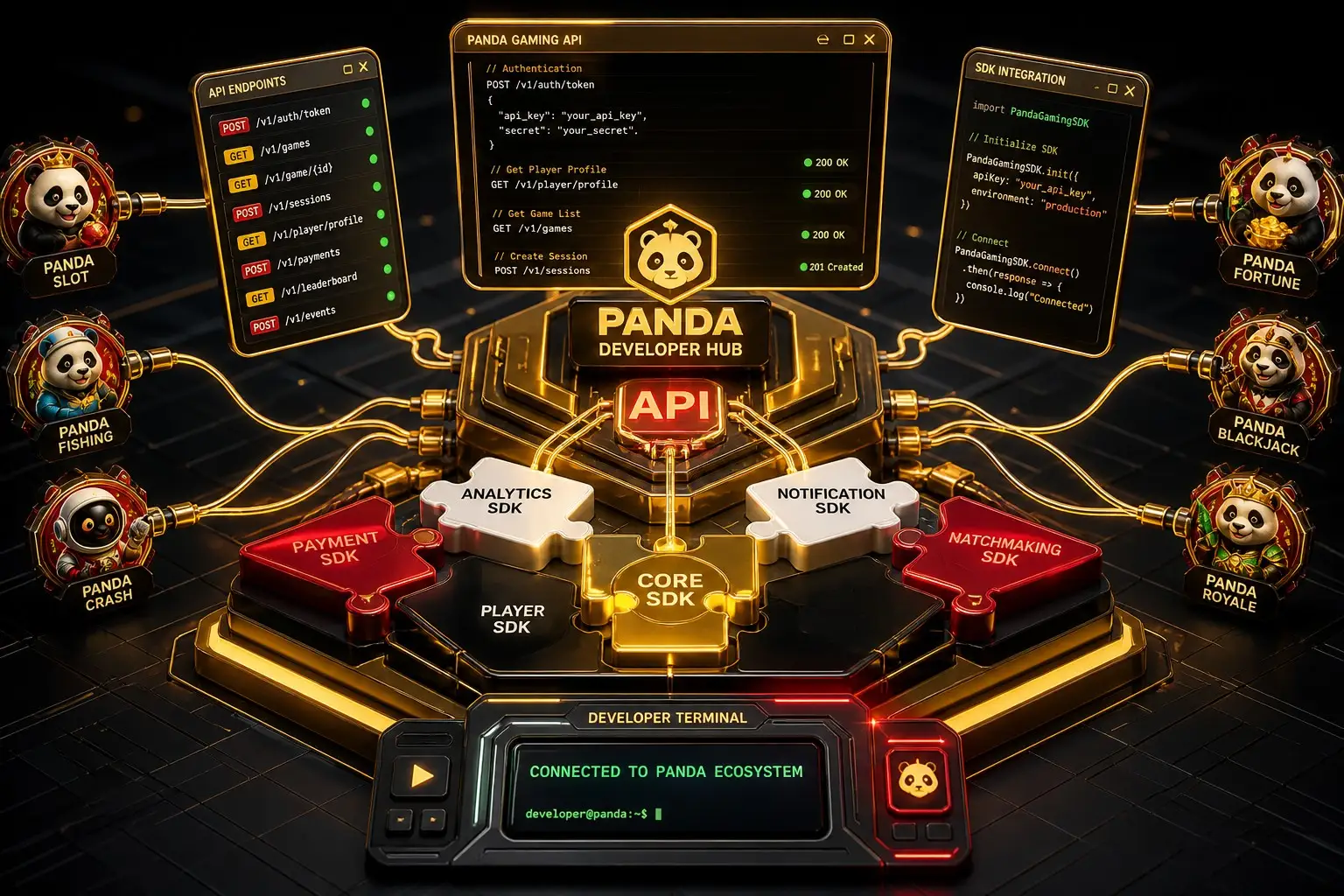
A closed platform limits you to its features. An open platform multiplies its features through yours. The panda master online game API exposes the platform’s core capabilities as programmable endpoints: game access, credit management, player data, reporting, and more. With this access, an operator can build custom frontends, integrate with existing CRM systems, automate workflows, or create unique player experiences—all powered by a certified, stable gaming backend underneath.
What the API Lets You Do
1. Integrate Games into Your Own Platform
The most common integration pattern: you operate your own platform, app, or website, and you want Panda Master’s games inside it. The API handles game launch, credit flow, and result reporting, so your players access the full catalog without leaving your environment. Your user experience, your wallet, your branding—with our games as the engine.
2. Automate Credit and Settlement Workflows
Manual credit management is a scaling killer. The API lets you automate: credit distribution to agents, balance reconciliation, and settlement workflows triggered by your own business rules. Distributors who automate these flows report significant reductions in operational time and error rates.
3. Build Custom Reporting and Analytics
The built-in dashboard covers standard needs, but your operation has specific questions. The API streams the raw data you need to build custom analytics: retention cohorts, segment performance, promotion ROI, or anything your strategy demands. Your reports, your dimensions, your decisions.
The SDK: Building Blocks for Developers
Beyond the API, the panda master SDK provides language-native libraries and components that accelerate development. Instead of writing low-level integration code from scratch, developers use tested building blocks for common patterns: game launching, wallet operations, event handling. The result is faster development, fewer integration bugs, and a shorter path from idea to production.
Use Cases the SDK Enables
- Custom player apps: Build a branded mobile or web app on top of the backend.
- Loyalty integrations: Connect the game engine to your existing loyalty and CRM systems.
- Automation bots: Build internal tools that handle routine operations automatically.
- White-label products: Combine the SDK with the white-label capability for fully custom brand launches.
Supporting an Ecosystem, Not Just an Integration
An API is only as valuable as its documentation and support. The Panda Master developer ecosystem includes: clear API documentation with examples, test/sandbox environments for safe development, versioning that avoids breaking changes, and responsive developer support. This commitment to the ecosystem means building on Panda Master is a durable decision, not a temporary workaround.
The Build vs. Buy Decision, Reframed
The classic dilemma—build your own engine or buy a standard platform—is now a false choice. The open API ecosystem lets you do both: buy the certified engine and build the custom layer on top. You avoid the millions and years of engine development while gaining exactly the custom features that differentiate your operation. The infrastructure risk is outsourced; the strategic customization is yours.
Case Pattern: The Operator Who Built a Custom Retention Platform
The value of an open ecosystem is clearest in the case of operators who have specific needs that no off-the-shelf dashboard fully meets. One operator from the 2025-2026 cohort ran a multi-location operation with a complex bonus and loyalty structure developed over years. The built-in platform tools covered the standard cases, but the operator’s competitive edge lived in custom promotions that required data the standard dashboard did not surface directly.
Using the API, the operator’s small technical team integrated the game engine with the custom loyalty system: game events and credit flows streamed into the operator’s own analytics, and custom bonus logic triggered based on the operator’s proprietary rules. The result was a loyalty experience that existed nowhere else in the market—and because it was built on the platform’s certified engine, it carried the reliability and compliance of the core system without the cost of building a game engine from scratch.
The development timeline was weeks, not years, because the SDK provided tested building blocks for the common integration patterns. The team did not reinvent game launching, wallet operations, or event handling; they built on them. The custom layer they added—the loyalty logic and its presentation—was exactly the 10 percent that differentiated their operation, delivered on top of the 90 percent they did not need to rebuild.
The pattern’s lesson: the open ecosystem does not ask operators to build more; it asks them to build only what matters. The certified engine handles the hard, expensive, risk-heavy parts. The operator builds the distinctive layer that wins players. That division is the economic logic of the API and SDK model.
Frequently Asked Questions
Do I need to be a developer to benefit from the API?
Not necessarily. Many integrations are handled by your existing technical team or a partner developer using the documentation and sandbox environment. If you have no technical resources, the standard dashboard and white-label options cover most needs without custom code.
Is the API secure for financial operations?
Yes. All API communication uses the same security standards as the core platform: authenticated endpoints, encrypted channels, and role-based access control. Credit and settlement operations carry additional verification layers, ensuring financial integrity in automated workflows.
Can I migrate my existing custom systems to the API?
Typically yes. The API is designed for integration with existing systems, and the data-export capability means your current data can move into the new architecture. The integration team provides migration support to make the transition smooth.
How do I keep my custom integrations working through platform updates?
The platform follows versioned API practices: breaking changes are introduced deliberately and communicated in advance, with migration windows. Your custom integrations continue to work through updates, and the sandbox environment lets you test compatibility before production changes. The ecosystem is designed for durability, not constant rework.
Can multiple developers or agencies work on my integration?
Yes. The API uses standard access management, so you can grant separate credentials to different developers or agencies with scoped permissions. This supports distributed teams and lets you bring in specialist help for specific projects without exposing the full system.
What level of support do developers receive?
Developers get documentation, a sandbox environment, and access to technical support. For enterprise integrations, dedicated engineering support is available to ensure complex builds succeed. The ecosystem is designed to be self-serve but backed by real people.
Getting Started With the Ecosystem
Entering the API ecosystem begins with documentation, not code. Review the API reference to understand the exposed capabilities, request sandbox credentials, and prototype your first integration in the test environment. Start with the highest-value use case for your operation—whether that is integrating games into your platform, automating credits, or building a custom report—and validate it before expanding scope. The sandbox makes this exploration risk-free, and the developer support team is available to guide the first build. Each successful integration becomes a template for the next.
What happens if my custom tool breaks after an update?
The sandbox environment is designed exactly for this: test compatibility before production updates land. Versioned APIs and communicated migration windows mean you have time to adapt. And because your integration uses standard, supported endpoints, breakage is rare and manageable. The ecosystem is built so your custom layer stays durable, not fragile.
Why the Ecosystem Rewards Early Adopters
The open ecosystem rewards operators who build on it early, because each custom tool they create becomes durable infrastructure for their operation. An integration built this quarter is still running next year, and the skills developed in building it apply to every future project. Early adopters also shape the platform’s direction, as their use cases inform the roadmap. The ecosystem is not a feature you consume; it is a foundation you build on, and the builders accrue the advantage.
Conclusion: Build Your Edge on a Proven Foundation
The operators who lead the next phase of the industry will not be those who bought the same platform as everyone else; they will be those who built something distinctive on top of a proven foundation. The panda master online game API and SDK make that possible: certified infrastructure, open access, and the tools to build exactly what your operation needs. Stop being limited by your platform. Start building on it.
Ready to integrate? Contact the Panda Master developer team for API access and sandbox credentials today.

Comments are closed