


Two stores can deploy the identical fish-table cabinet with the identical math model and produce materially different results. The difference is rarely the game — it is whether the game feels like it belongs in that neighbourhood. This is the discipline of localisation, and in the fish-table and sweepstakes sector it functions as a genuine player-acquisition lever. A culturally adapted theme reduces the psychological distance between a first-time visitor and the screen, which shortens the path to a first session and improves the odds of a first deposit. Done well, with localized fish table themes drawn from the actual community rather than from a stereotype of it, localisation is one of the highest-return investments a multi-store operator can make. Done carelessly, it offends exactly the players it was meant to attract.
Why Localisation Moves Numbers
The commercial argument for cultural adaptation in gaming content rests on three measurable effects:
- Lowered first-session friction. Familiar imagery and language reduce the perceived complexity of an unfamiliar machine, which raises trial rates among first-time visitors.
- Higher session length. Players stay longer with content that resonates emotionally; familiarity sustains attention where novelty alone fades.
- Stronger word of mouth. A game that feels “made for us” is something players mention to friends, which is the cheapest acquisition channel available to a neighbourhood operation.
These effects compound. A store that becomes known as the place where the games reflect the community builds a reputation that a competitor with superior cabinets but generic theming cannot easily displace. The mechanism is the same one behind successful neighbourhood businesses in any sector: relevance beats specification.
Localisation Is a Set of Layers, Not a Translation
The most common mistake is treating localisation as language selection. Language is necessary and insufficient. A genuinely adapted game operates across five layers, each of which can independently make a game feel native or foreign:
- Visual language: Colour palette, iconography, character design and art style. Gold-and-red density, aquatic motifs, animal symbolism and festival imagery all carry different meanings in different communities.
- Verbal language: Not only which language, but register and phrasing. A menu translated literally reads as machine output; phrasing written by a native speaker for that audience reads as hospitality.
- Narrative and theme: What the game is about. Mythological, maritime, festive or everyday-life framing each lands differently depending on the community.
- Ceremony and calendar: When the game is promoted. Localisation extends to timing — aligning tournaments and rewards with the festivals that structure a community’s year.
- Social and spatial fit: How play is framed socially. Table-based, group-oriented environments and solo sessions appeal to different player expectations, and the surrounding service model should match.
An operator who addresses only layers one and two produces a game that is translated but not localised. The players notice immediately.
Theme-to-Audience Mapping
The table below is a planning tool, not a prescription. It maps broad theme families to the player expectations they tend to serve, with the important caveat that individual players are individuals — communities are diverse, and any theme family will have players who love it and players who are indifferent. The purpose is to help operators choose a starting direction for a specific store, informed by the actual demographic reality of that neighbourhood.
| Theme Family | Player Expectation Served | Design Cues | Community Fit Considerations |
|---|---|---|---|
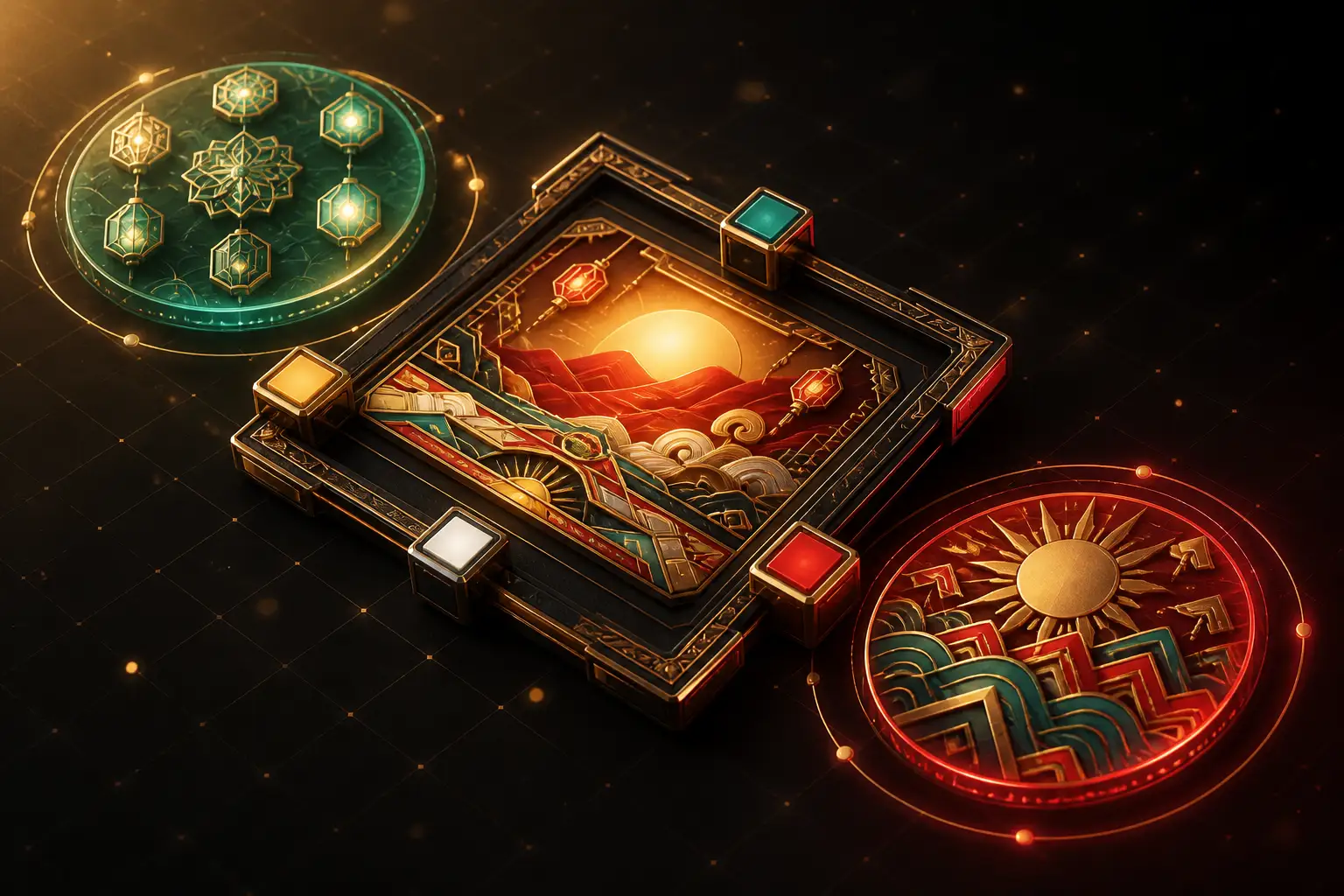
| Traditional festival & prosperity motifs | Optimism, luck framing, seasonal celebration | Gold-and-red palettes, lantern and firework motifs, aquatic symbolism, felicitous number systems | Strong where East and Southeast Asian communities are established; strongest when timed to Lunar New Year and similar seasonal moments |
| Maritime, dragon and mythic sea themes | Spectacle, escalation, boss-style progression | Deep-ocean backdrops, large mythic creatures, escalating multiplier reveals | Broadly legible; works well as a network default where demographic mix is varied |
| Festive and family-celebration themes | Warmth, gathering, community belonging | Vibrant multi-colour palettes, music-linked visual rhythm, celebration iconography | Strong where Latino communities are established; pair with calendar moments such as Día de los Muertos, Las Posadas and regional national days |
| Sports and regional-pride themes | Competitive identity, local allegiance | Team-colour palettes, tournament-style leaderboards, rivalry framing | Effective in neighbourhoods with strong sports culture; requires care to avoid political or national sensitivity |
| Everyday-life and career-aspiration themes | Relatability, low-intimidation onboarding | Familiar settings, food and street motifs, gentle pace at lower stakes | Useful for mixed-age neighbourhood audiences and for first-time players |
| Neutral arcade-aquatic themes | Universal legibility, low cultural specificity | Bright marine life, minimal text, clear reward feedback | Safest default for a first store in an unfamiliar market; layer localisation after observing who actually plays |
Read the table as a hypothesis generator, not a lookup. The operative rule is that the community in the catchment area decides, and the only reliable way to learn what they respond to is to observe play and ask.
Designing Respectfully: The Anti-Stereotype Rule
There is a real commercial cost to stereotyping. Players recognise when their culture has been reduced to a visual shorthand, and the reaction is not neutral — it is withdrawal, sometimes vocal. A theme that feels like a costume reads as disrespect, and disrespect kills the word-of-mouth effect that makes localisation profitable in the first place.
Practical Guardrails
- Consult before you design. Ask staff, regulars and community figures in the catchment area what imagery feels respectful and what feels reductive. This takes a week and prevents expensive errors.
- Prefer specificity to shorthand. A well-researched regional motif beats a generic “exotic” collage every time. Specificity signals genuine interest; shorthand signals distance.
- Avoid mixing cultures into one blur. Treating Asian or Latino communities as a single aesthetic is both inaccurate and off-putting. Different regions, languages and traditions deserve distinct treatment.
- Keep symbolism respectful. Sacred or ceremonial imagery should not be used as a decorative reward layer. When in doubt, leave it out.
- Localise the language properly. Use the language variant the community actually speaks, written by a native speaker, and test it with players before launch.
- Let the community lead on festivals. Align promotions with the calendar a neighbourhood observes rather than the calendar you assume it observes.
Respectful localisation is also simply better design. Games built with real cultural research have richer visual vocabularies, more coherent narrative structure and stronger emotional hooks than games assembled from surface-level motifs.
Ceremony and Calendar: The Overlooked Localisation Layer
Timing is localisation. A prosperity-themed game launched three weeks after the relevant festival has lost most of its resonance, while the same game launched in the run-up arrives when the community is already primed to engage. The calendar is therefore part of the product decision, not just the marketing decision.
Practically, this means maintaining a per-store event calendar that encodes the festivals the local community actually observes, the local sports fixtures that structure the week, and the community gatherings that bring people together. Then align — in a measured way — tournament windows, reward structures and prize framing with those moments.
An Illustrative Example of Calendar Alignment
The following is an illustrative model with stated assumptions, not a verified performance claim. Assume a store in a neighbourhood with a strong East Asian community schedules a prosperity-themed tournament across the days leading into Lunar New Year, with prize framing that references the season and reporting that ties the tournament into the store’s own celebration. Assume a second store, in a neighbourhood with a strong Latino community, instead structures a series of festive weekend events around Día de los Muertos and the December posada season, each with a themed leaderboard and a prize mix including family-sized celebration items rather than purely economic rewards. Under a reasonable assumption that session frequency rises during culturally significant periods, both stores should see a measurable lift over a matched baseline period — and, more importantly, should see improved recognition and word-of-mouth in their neighbourhoods.
The measurement discipline matters here. Track event-period activity against a matched non-event period, and track new-player acquisition in the weeks surrounding each cultural moment. If a themed event does not lift either, the theme is decoration rather than localisation, and the budget should move elsewhere. The wider engagement mechanics that make these events work are the same ones covered in our guide to event and tournament engine engagement.
Case Pattern: The Theme That Filled a Room
Consider an illustrative case pattern. A two-store operation had identical cabinets, identical math models and near-identical floor layouts. One location sat in a neighbourhood with a well-established Latino community and was, by any measure, underperforming: traffic was adequate, but trial rates were low and first-deposit conversion lagged the sister store by a wide margin. Staff reported the same thing in different words — first-time visitors looked at the games, watched for a moment, and left.
The operator tested a themed adaptation. Artwork and reward framing were rebuilt around festive family-celebration imagery sourced with community input; menus and floor signage were rewritten in the neighbourhood’s dominant language by native speakers; the store’s event calendar was rebuilt around the local festival seasons rather than the network’s standard promotion rhythm; and one weekend event was designed around a community celebration, with family-friendly prize framing and a host from the neighbourhood itself.
The behavioural change was concentrated at the trial stage. First-session rates among walk-in visitors improved, and the improvement was largest among players who had previously visited and not played. There was no change whatsoever in the games’ underlying economics — the same math model, the same RTP structure, the same cabinet. Only the frame changed. The general lesson: for neighbourhood operations, the cost of relevance is low and the return is high, but the localisation has to be genuine. Where a theme is adopted without community input, the same investment produces a fraction of the effect, and can produce a negative one.
Testing and Scaling Localisation Across a Network
Localisation at scale is a portfolio problem. A multi-store operator should not hand-build a bespoke theme for every location; the correct model is a central library plus a local configuration layer:
- Build a core catalogue. Maintain a set of themes that perform reliably across your network as the default deployment.
- Define configurable layers. Language packs, reward framing, festival calendar and signage should be swappable per store without a rebuild.
- Pilot in one store. Test a new cultural adaptation in a single location with a matched baseline before committing budget.
- Promote what works. A theme that lifts trial and first-deposit rates in one store is a candidate for every store with a comparable catchment.
- Revisit annually. Neighbourhoods change. A localisation decision made three years ago may no longer reflect who walks through the door.
This approach keeps localisation disciplined. It also keeps it affordable, which is the only way it survives contact with a quarterly budget review.
Frequently Asked Questions
Is localisation worth the cost for a single store?
Often yes, and more so than for a large network, because a neighbourhood store’s entire competitive advantage is relevance. Language packs, signage and a themed event calendar are modest investments compared with a cabinet refresh, yet they affect the earliest and most decisive stage of the funnel — whether a first-time visitor decides to play at all.
Do I need different math models for different cultural themes?
No. Cultural adaptation operates on presentation, framing, language and timing, not on the underlying game economics. Keeping the math model consistent protects your margin modelling and regulatory posture while still letting the game feel native to each community.
How do I avoid stereotyping while still adapting a theme?
Consult the specific community before designing, prefer researched regional specificity over generic shorthand, keep the cultures you serve distinct rather than blending them, and avoid using sacred imagery decoratively. If a design decision has to be justified by “it looks the part,” it is probably shorthand rather than localisation.
Which language variant should a store use?
The variant the local community actually speaks, confirmed by asking local staff and regulars rather than assumed. Have all player-facing text written by a native speaker of that variant, and test phrasing with players before launch — literal translation reads as machine output and undoes the goodwill the localisation was meant to create.
How do I measure whether a localised theme is working?
Track trial rate among first-time visitors, first-deposit conversion, session length, and new-player acquisition in the weeks around themed events, each against a matched baseline period. If a themed deployment lifts none of these, treat it as decoration and redirect the budget to a tested alternative.
Can localisation be reversed if it underperforms?
Yes, provided it is built as a configuration layer rather than a bespoke rebuild. Language packs, reward framing and event calendars should be swappable per store, so a theme that fails can be retired without discarding the platform work beneath it.
How does localisation relate to player acquisition and retention strategy?
It sits at the very front of the lifecycle, where it affects whether a visitor ever becomes a player. Once a player is active, retention depends on lifecycle and loyalty mechanics rather than theming — see our guide to viral growth strategies for Panda Master agents for how community-level relevance converts into referral-driven acquisition.
Conclusion: Make the Game Belong
Localisation is not decoration layered onto a finished product; it is a player-acquisition decision made at the design stage. Choose themes from the community around the store rather than from a generic template, adapt language, festival calendar and reward framing together, and design with genuine respect rather than shorthand. Then pilot, measure trial and first-deposit conversion against a matched baseline, and scale only what works. A culturally adapted fish table does not change a single line of the math model — it changes whether the player in front of the cabinet feels like the game was built for them, and that feeling is worth more than any bonus.
Ready to deploy locally adapted themes across your stores? Talk to the Panda Master team about a configurable fish-table platform that supports per-store language, theme and event configuration.
Get In Touch
Interested in Panda Master? Send us a message.


Comments are closed