


There is a reliable way to double player engagement in any gaming network: introduce competition. When players are not just playing but competing—for a leaderboard position, a prize, or bragging rights—their volume increases, their deposits rise, and their loyalty deepens. The challenge has always been operational: running tournaments manually is complex. The panda master online game tournament engine removes that complexity, letting distributors run tournaments with panda master as easily as they run the games themselves. This guide explains how the event engine turns engagement into a system.
Why Events and Tournaments Matter
Engagement research is consistent: competition is one of the strongest engagement drivers in gaming. The psychology is simple—players compare themselves to others, and the comparison motivates action. A player who is indifferent to their own session will chase a leaderboard position. A player who has plateaued will re-engage for a tournament. Events convert passive players into active competitors, and that conversion is measurable in GGR.
What the Tournament Engine Provides
1. Live Leaderboards
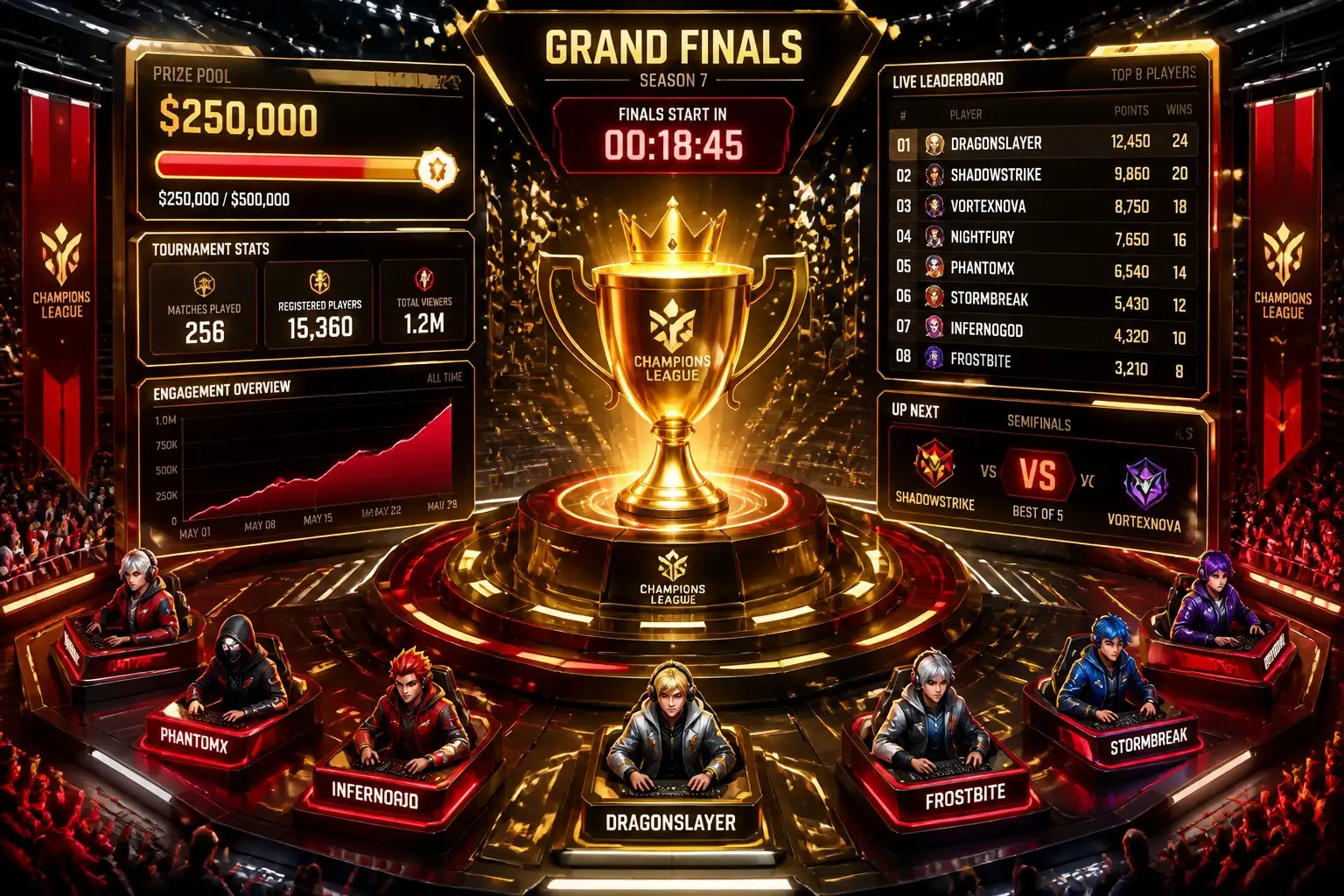
Real-time standings are the heart of a tournament. The panda master online game event engine updates leaderboards live, showing players their position and the gap to the next tier. The visibility of position is what drives the final-day volume surge—players push to protect or improve their rank.
2. Flexible Tournament Formats
One tournament does not fit every goal. The engine supports multiple formats: volume tournaments (total play), win-rate competitions, time-boxed sprints, and themed events. Distributors choose the format that matches their objective, from driving volume to reactivating dormant players.
3. Prize and Payout Automation
The operational burden of tournaments is prize management. The engine automates scoring and payout logic: leaderboard positions are calculated continuously, and prizes are distributed according to the configured structure. Distributors set the rules; the platform executes them.
Beyond Tournaments: The Full Event Toolkit
Tournaments are the anchor, but the event engine supports the full engagement spectrum:
- Jackpot events: Accumulating prize pools that grow with play, creating visible chase dynamics.
- Reload campaigns: Time-boxed bonus structures that drive deposits during specific windows.
- Community challenges: Cooperative or competitive goals that bring the player base together.
- Seasonal promotions: Themed events that keep the calendar fresh and players anticipating.
Designing Effective Tournaments: The Playbook
- Define the objective: Volume, retention, reactivation, or acquisition. The objective determines the format.
- Set the duration: 48-72 hours sustains tension without exhausting players.
- Structure prizes: Pay out the top 10-20 percent rather than winner-take-all; more winners means more players who feel successful.
- Promote the event: Build anticipation before launch and remind players during the event.
- Measure the lift: Compare event-period metrics against baseline to quantify the impact.
The Data on Event-Driven Engagement
Distributor networks running regular events report consistent patterns: session frequency rises during event periods, average deposit size increases as players chase positions, and return rates improve as players anticipate the next event. The engagement lift is not a one-time spike; it compounds as players learn that your network runs exciting events and schedule their play around them.
Case Pattern: The Weekly Tournament That Transformed a Network
The engagement power of the event engine is best shown through a case pattern from 2025-2026. A distributor’s network had reached a familiar plateau: steady but flat volume, with players treating the games as a routine habit rather than an exciting destination. The distributor had tried bonuses and promotions, but the effect faded quickly. The decision was made to commit to a recurring tournament format rather than one-off events.
The tournament was designed around volume: a 72-hour window each week where players competed on a live leaderboard, with prizes for the top tier of participants. The engine handled the standings and payouts automatically, so the operational burden was minimal. The distributor promoted the tournament in the community, and players began planning their play around the weekly competition.
The behavioral shift was visible within weeks. Session frequency rose during tournament windows as players chased positions. Deposit size increased as competitors bought credits to protect their rankings. The leaderboard’s visibility created a constant comparison that kept players engaged throughout the window, not just at the end. The network’s volume grew beyond the previous plateau, and the weekly rhythm gave players a reason to return consistently rather than sporadically.
The general lesson: recurring events create anticipation and habit, which one-off promotions cannot. The event engine makes recurrence operationally trivial, so the distributor’s job is promotion and community energy, not tournament administration.
Frequently Asked Questions
How much prize budget should I allocate to a tournament?
Start with 10-15 percent of expected incremental event revenue, then scale based on results. The prize pool creates the spectacle; the budget discipline protects your margin. Track each event’s return and adjust the next one.
Do tournaments cannibalize regular play?
No—they concentrate it. Tournament participants also play regular sessions around the event, and the event’s visibility attracts new players. The net effect is higher total volume, not a shift of existing volume.
Can I run events automatically?
Yes. The event engine supports scheduled, recurring events with automated scoring and payouts. Once configured, a weekly tournament can run itself, freeing you to focus on promotion and player relations.
How often should I run events?
Regularity beats frequency. A predictable weekly or bi-weekly event builds anticipation; running events constantly dilutes their impact. Establish a rhythm your players can learn, then protect it. The contrast between event and non-event periods is what creates the urgency that drives participation.
Can I combine tournaments with other promotions?
Yes, and layering works well: a tournament as the anchor, with reload bonuses and community challenges supporting it. The key is keeping the structure clear so players understand the primary competition. Layered events maximize engagement without confusing the participants.
What if my player base is small?
Start with smaller formats: single-evening jackpots or weekend top-player bonuses. The principles—competition, visibility, reward—work at any scale. As your base grows, expand into larger tournament formats.
Getting Started With Your First Tournament
The first tournament should be simple and well-executed. Choose a 48-72 hour volume format, define a modest prize structure that pays out the top tier of participants, and promote it in your community with real anticipation. Let the engine handle the standings and payouts while you focus on player energy. After the event, compare the period against your baseline and capture the lessons for the next one. Each tournament builds on the last, and the rhythm of recurring events becomes the growth engine your players plan their play around.
What if a tournament prize goes to a player who then churns?
Structure prizes partially as reload credits to keep winnings in your ecosystem, and recognize that the tournament’s primary value is the engagement lift across the whole base, not just the winners. A winner who leaves is rare when the prize is tied to continued play. The aggregate engagement gain from competition far outweighs the individual prize cost.
Why Competition Creates Lasting Habits
Competition does more than boost a single event; it builds lasting player habits. Players who experience tournaments learn to check leaderboards, plan their play around events, and return for the next competition. This habit formation is the deepest engagement lever available, because it changes how players relate to your network—from occasional visitors to scheduled participants. The event engine makes this habit loop easy to run consistently, and consistent competition is what turns a player base into a community.
Can tournaments run across multiple game categories?
Yes. The event engine can combine categories in a single tournament, rewarding players who engage across the portfolio. This is a natural extension of cross-sell: a multi-category tournament encourages players to explore the full catalog while competing. The leaderboard aggregates activity across the included games, deepening both engagement and portfolio adoption.
Can the engine handle simultaneous events in different locations?
Yes. Events are configurable per location or network segment, so different groups can run different competitions at the same time. This flexibility is valuable for multi-location operators who want local events tailored to each community while maintaining a unified platform. The engine scales event management alongside your operation.
Conclusion: Build the Competition, Grow the Network
The difference between a network that plays and a network that grows is often a single element: competition. The panda master online game tournament engine makes running tournaments with panda master a configuration decision rather than a development project. Live leaderboards, automated prizes, and flexible formats turn engagement into a system you control. Events are not extras; they are the operating rhythm of a growing network. Schedule your first tournament, and watch your players compete their way into loyalty.
Ready to run your first tournament? Contact the Panda Master team to configure your event engine and launch a competition this week.
Get In Touch
Interested in Panda Master? Send us a message.


Comments are closed